
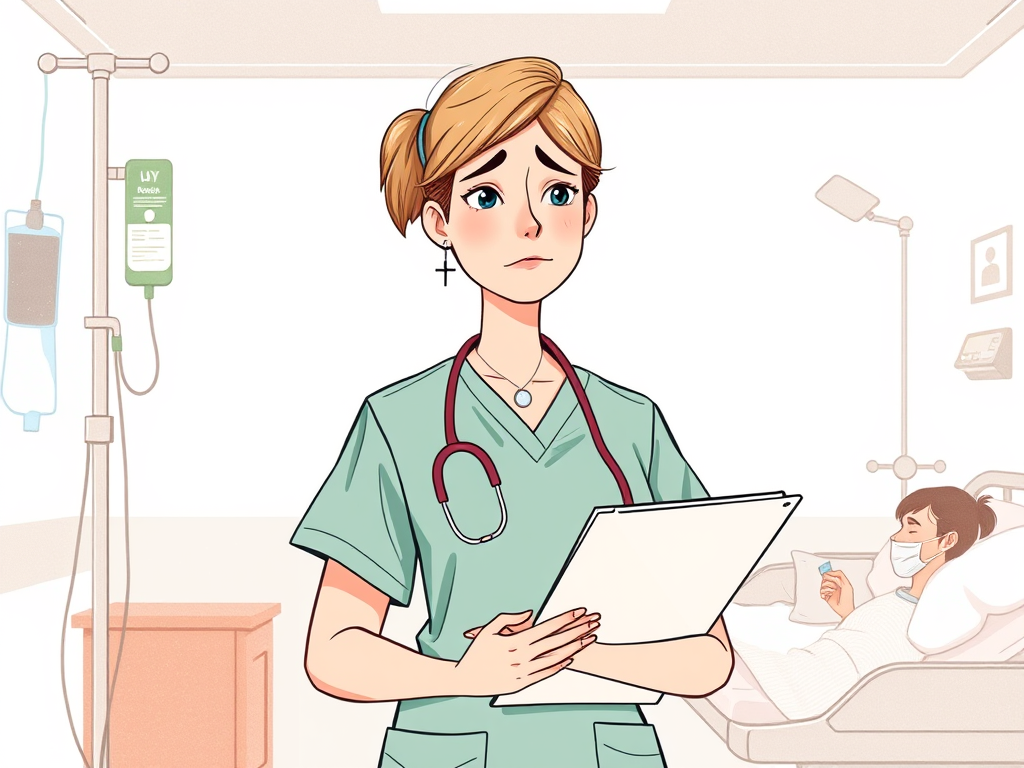
There are things you expect to hear in a hospital—alarms, beeping machines, the clatter of trolleys. And then there are the things nurses hear all the time that somehow never make it into nursing school syllabi.
Sometimes they’re sweet. Sometimes funny. Occasionally frustrating. But they all come from people at their most vulnerable.
And so we answer—respectfully, professionally, with empathy.
But in our heads? Well… there’s a whole other monologue happening.
Here are some of the most frequently asked questions I get as a nurse—and the real talk behind my carefully curated responses.
1. “Nurse, can you just check my blood pressure real quick?”
What I say (with a smile):
“Of course! I’ll be there in a few minutes to check it for you.”
What I’m thinking:
It’s the fourth time you’ve asked today, and your BP’s been consistently fine. I’ve also just finished prepping meds, updating obs, and chasing a CT scan that’s been pending for hours.
But sure—let me squeeze this in, along with the 27 other things I haven’t done yet.
The truth behind it:
I get it. Sometimes it’s not about the number. It’s about control. When your body has betrayed you—whether it’s a stroke, a sudden fall, or symptoms you can’t explain—knowing your BP gives you something tangible to hold on to.
So even if it’s the fifth time, I’ll check it again. Not because I doubt the machine—but because I know what it’s like to need reassurance more than a reading.
2. “Can I go home now?” (Five minutes after arriving)
What I say (gently):
“We just need to complete your assessment and wait for the doctor to review everything first.”
What I’m thinking:
You literally just got here. We haven’t even done your bloods or scan. Your BP’s high, and your left arm’s numb—but yes, please, let’s discharge you back into the unknown.
The truth behind it:
This question is rarely about impatience. It’s usually fear wearing a casual mask. The truth is, staying means confronting the fact that something might be wrong. And leaving means you get to pretend, for a few more hours, that everything is fine.
But the sooner you let us do our job, the sooner we can actually get you closer to going home safely.
3. “Why are there so many of you just standing around?”
What I say (professionally):
“We’re actually discussing patients during handover so we can plan their care properly.”
What I’m thinking:
Standing around? Really? We’re reviewing escalation plans, allocating beds, figuring out who needs urgent imaging, and trying to hold back the oncoming chaos like Florence Nightingale Avengers.
The truth behind it:
Nursing is 80% anticipation. The calm you see? It’s controlled chaos behind the eyes. Most of our thinking happens while we look like we’re doing nothing—because good planning should look effortless. That’s how you know it’s working.
4. “Are you the doctor?”
What I say (warmly):
“No, I’m your nurse. But I’ll be here the whole time you’re being looked after.”
What I’m thinking:
Nope, not a doctor. But I’ll probably be the one who notices the early warning signs, calls the doctor, explains their plan to you, and checks if your meds were given—twice. Also the one who wipes your tears after the doctor leaves.
The truth behind it:
This isn’t about ego. I’m proud to be a nurse. Doctors may make the diagnosis, but nurses are the ones who make sure you survive the night. We are the bridge between orders and outcomes, between you and everything else.
5. “Can you heat up my food?”
What I say (apologetically):
“I’m really sorry—we’re not allowed to reheat outside food due to food safety policies.”
What I’m thinking:
If I had a microwave, a moment of peace, and no legal risk—I’d reheat your food myself, sit with you, and eat a bowl too. But alas, NHS rules are not fond of home-cooked meals and bacteria.
The truth behind it:
This isn’t just about food. It’s about home. It’s about your daughter waking up early to pack something comforting. It’s about normalcy. And I hate that I have to say no.
So I make up for it with warmth, conversation, and a compliment on how good it smells.
6. “Why do you look tired?”
What I say (with a soft chuckle):
“It’s been a busy shift, but I’m okay—thank you for asking.”
What I’m thinking:
Tired? Yes. Emotionally, physically, spiritually. But thank you for pointing out the state of my eyebags, which now deserve their own postcode.
The truth behind it:
We are tired. But we’re also here. Even after 12 hours. Even when we’ve held the hand of someone dying and had to smile for the next patient. That tiredness is the price of showing up, of caring deeply.
And somehow, we wear it like a badge.
7. “Can I have another cup of tea?”
What I say (cheerfully):
“Sure! Let me just finish what I’m doing and I’ll bring it over.”
What I’m thinking:
Right after I finish handing over, checking two blood sugars, and calling radiology for the fourth time about your CT scan. Also, the tea trolley is being guarded like it’s the Crown Jewels, but I’ll fight the battle for you.
The truth behind it:
Tea is not just tea in a hospital. It’s comfort. Warmth. A reminder that something ordinary still exists. That life isn’t all needles and alarms. And if I can give you that moment? I will—no matter how small.
8. “What vitamins should I take so I won’t have a stroke like my dad?”
What I say (educationally):
“That’s a great question. Vitamins can support health, but the real key is lifestyle: blood pressure control, less salt, staying active, and getting check-ups.”
What I’m thinking:
If only it were that easy. If only I could say “Vitamin C and D3 and a dash of turmeric” and you’d be bulletproof. I wish I had that magic pill too.
The truth behind it:
This question always comes from a place of fear. From watching someone you love suffer. From wanting certainty in a world that offers none.
But health is not a miracle—it’s a practice. And I’ll walk that journey with you, if I can.
9. “Nurse, can you scratch my back?”
What I say (kindly):
“Of course—if you can’t reach or need help, I’ve got you.”
What I’m thinking:
Just adding “professional back-scratcher” to my growing list of unofficial titles, right between “emotional support human” and “IV whisperer.” Let’s go.
The truth behind it:
It’s never just about the itch. Sometimes it’s the most human request you’ll hear all day. A moment of vulnerability, of being seen as a person—not a diagnosis.
So yes. I’ll scratch your back. And I’ll do it gently.
10. “Is it okay if I ask something silly?”
What I say (genuinely):
“Absolutely. There are no silly questions when it comes to your health.”
What I’m thinking:
This might be the most honest moment of the day. Please ask. Even if it’s about the afterlife. Even if it’s about your cat knowing you’ve had a stroke. I’m here for all of it.
The truth behind it:
The “silly” questions are often the most sacred. They’re the ones people have been afraid to ask for days. They crack the surface, open the space, and let the soul breathe.
And sometimes, those questions lead to the most unforgettable conversations of my career.
Closing Reflection:
Behind every question is a deeper longing—to be seen, heard, and understood.
Nurses don’t just answer questions—we listen between the lines.
We don’t just deliver care—we translate chaos into calm, one conversation at a time.
So yes, ask us. Even the awkward ones. Especially the awkward ones.
Just maybe… not while we’re holding a bedpan.

Leave a Reply